

Using AtticFoil™ in Radiant PEX Flooring Over Non-Conditioned Areas
If you are using radiant heat PEX tubes under a floor, then you need a radiant barrier to direct the heat upward into the floor. There are typically two different cases for radiant floors:
Over a conditioned space. Example: a finished basement or between floors of a home
Over a non-conditioned (or cold) space. Examples: over a non-heated basement or over a vented crawl space
The install methods are the same for the radiant barrier foil, however over a cold space (non-conditioned) you will also add traditional insulation to further reduce conductive heat loss.
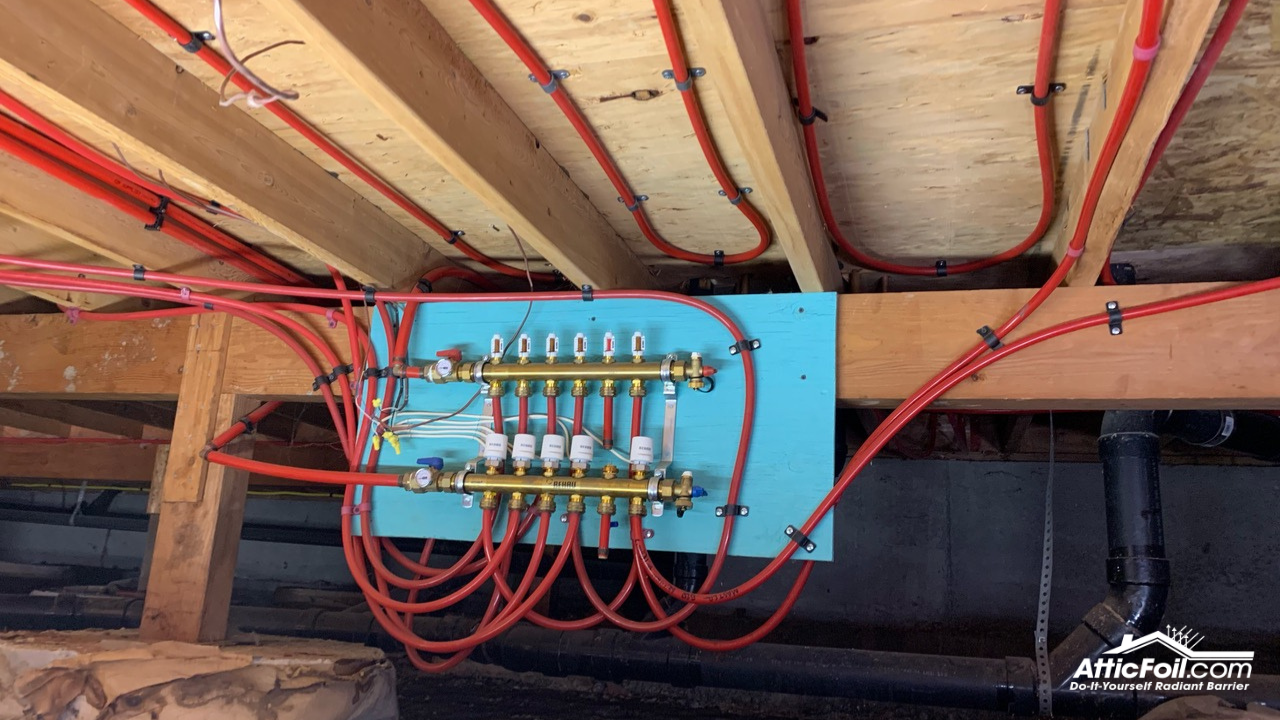
The concept is really pretty simple. The PEX are attached to the bottom of the subfloor and they get hot from either hot water or glycol running through them. When the tubes get hot they act just like a hot light bulb. The heat wants to go both upward into the wood, and downward to the space below. However since the goal is to heat the floor above the PEX tubes, we need to find a way to prevent heat loss to the room below the tubes. A radiant barrier will act like a REFLECTOR (just like a mirror) and direct the heat that is going downward back UP towards the floor to make the PEX radiant heating system more efficient.
For both methods, the installation is pretty much the same for the foil so the difference is whether or not you need to add traditional insulation.
POURING CONCRETE OVER THE TUBING?
If you are pouring concrete over the in-floor radiant floor PEX tubing, then you cannot benefit at all from adding a radiant barrier since there's no air gap. In that case, the heat is purely conductive, not radiant (yes, even the heat coming from the PEX is conductive).
Is Radiant Barrier the only option?
There are other products that are made from aluminum fins which clip on the PEX tube. These products help carry the heat by conduction into the floor. These products are expensive compared to AtticFoil™, and there are usually gaps between the clips that allows the heat to radiant downward, limiting the results.
Additionally, once the floor gets warm, the whole floor wants to radiant heat both upward and downward. You do not want to lose the heat going downward, this is where a radiant barrier comes in: a radiant barrier will reflect the radiant heat back upward. This is the same concept as an attic installed radiant barrier. The roof will get hot and we do not want the radiant heat to enter the attic. A radiant barrier installed in the attic will reflect heat upward towards the sky just like it will reflect the heat upward towards the floor in a radiant flooring application.
How to Install AtticFoil™
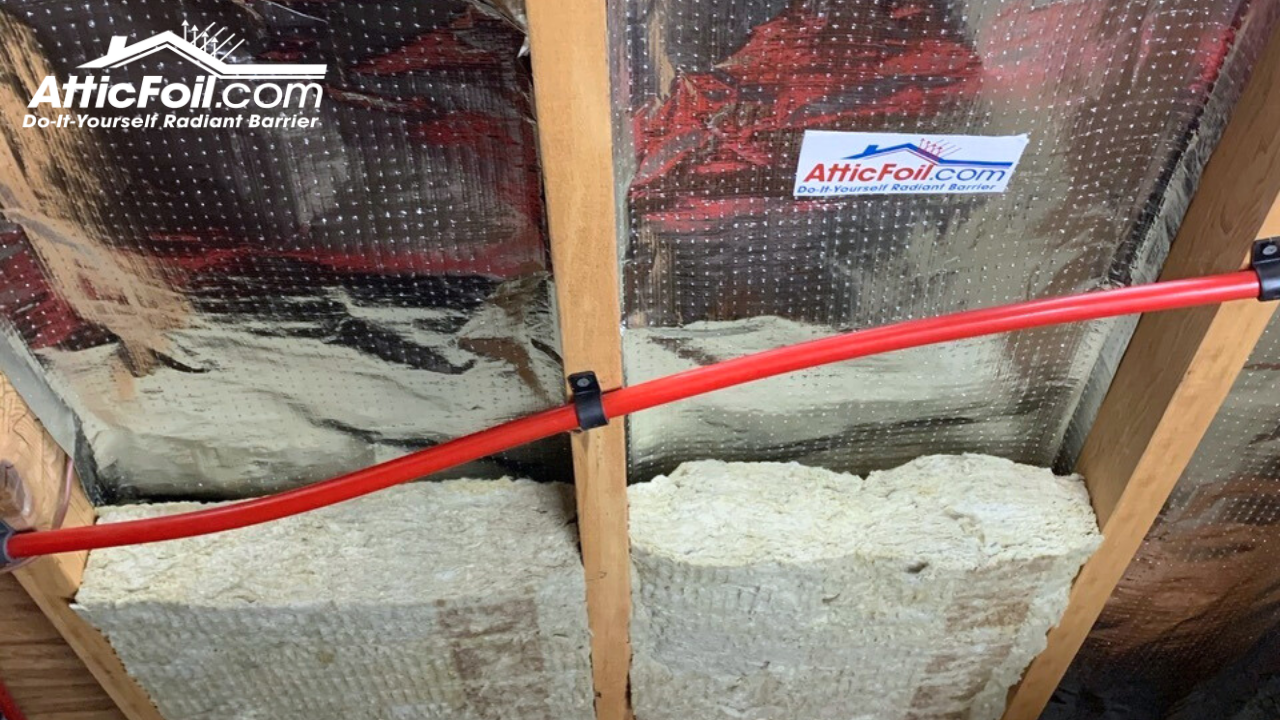
Just like the radiant heat flooring over a conditioned space installation, you will add the foil first, closest to your PEX. The difference is that you will add the foil between the floor joists (the ceiling joists from the basement side), taking care to leave an air gap between the foil and the radiant tubing (this is similar to the Cathedral Ceiling installation method). The standard layers coming from the floor down should be subfloor, radiant heat tubing (Pex tubing), air gap, radiant barrier foil, and insulation. In this application a foam strip is attached to the subfloor to ensure the air gap above the foil is not compromised when the insulation is added. It’s not necessary, but it can help.
Then, once you’ve achieved an air gap between the foil and the PEX tubes, you will add insulation below the foil; this will give you a layered system. The insulation will fit right up against the foil surface on the bottom. The radiant barrier will reduce radiant heat loss and the traditional insulation will reduce conductive heat loss. Below the insulation you will usually want to finish it out with drywall or another product that will help hold the insulation in place and provide an air barrier for the insulation.


Insulating the Sub-Floor Below the Foil
When you're using radiant heat above a non-conditioned space (meaning the are below the flooring is outside/not a living space), then you should add R-value too. Insulate with foam, batt insulation, or blown in. Fill the bottom of the joists well and snugly to maximize any conductive heat loss downward.
You can cover the bottom of the joists with a vapor barrier for added moisture protection too or you can also add another layer of foil here, across the bottom of the joists just like we show on the crawlspace insulation page.